How to Prepare Your Lawn For Winter After a Drought
If you want to prepare your lawn for winter, now is the time to look beyond its colour and assess how well it’s equipped for the months ahead.
After an exceptionally hot, dry summer, the return of green grass can make it seem as though your lawn has recovered.
But green doesn’t always mean healthy.
Your lawn may regain its colour yet enter autumn with thinner grass, weaker roots, bare patches and compacted soil. Some areas may have bounced back better than others, while finer grasses may have been lost altogether during the driest conditions.
That matters because winter brings a very different set of challenges.
Has Your Lawn Really Recovered From Summer?
Rainfall and cooler temperatures can revive dormant grass surprisingly fast.
The lawn may turn green within weeks, though recovery beneath the surface can take longer.
After prolonged drought, you may still find:
- Thin or sparse areas
- Bare patches where grass has been lost
- Shallow or weakened roots
- Compacted soil
- Areas that struggle to absorb or drain water
- Changes in the types of grass growing across the lawn
- Sections recovering more slowly than others
Take a proper look before deciding the job is done.
A lawn that enters winter with good density and healthy soil will be better prepared for what comes next.
Why Winter Can Be Difficult for a Weak Lawn
Grass growth naturally slows as temperatures fall and daylight hours reduce.
That means your lawn has less opportunity to repair damage during winter.
At the same time, it may have to deal with:
- Lower light levels
- Heavy rainfall
- Saturated soil
- Frost
- Moss
- Lawn disease
- Fallen leaves
- Regular foot traffic
A healthy lawn can better withstand these seasonal pressures.
A thin lawn that’s already struggling after summer has far less room for error.
Give Your Lawn the Right Autumn Nutrition
If you want to prepare your lawn for winter, nutrition is an important part of the process.
But autumn feeding differs from feeding during the rapid growth of spring and summer.
At this time of year, you don’t want to encourage masses of soft, lush growth. Instead, the aim is to provide the right seasonal nutrition to support the plant as conditions get colder.
TruGreen’s TruLite, TruPlus and TruMax lawn care packages include seasonal fertiliser applications throughout the year, helping your lawn get nutrition suited to each season.
That’s one reason the right treatment matters more than simply applying whatever fertiliser happens to be left in the shed.
Keep Fallen Leaves Under Control
Autumn leaves can quickly become a problem for grass.
A thick, wet covering can:
- Block sunlight
- Reduce airflow
- Trap moisture
- Weaken the grass underneath
- Create conditions that favour moss
- Increase the risk of some fungal lawn problems
You don’t need to remove every leaf as soon as it falls. Just don’t let a thick layer sit on the lawn for too long.
Regular raking, blowing, or collecting leaves is one of the simplest ways to prepare your lawn for winter.
Make Sure Autumn Rain Can Move Through the Soil
Summer was all about getting moisture into the lawn. In autumn and winter, the challenge can be the opposite.
As rainfall increases and evaporation slows, compacted soil may stay saturated for longer. Grass roots need oxygen as well as moisture, so standing water and prolonged saturation can make growing conditions difficult.
Look out for:
- Persistent puddles
- Soft or muddy areas
- Water running across the surface
- Sections that remain wet long after rainfall
- Increased moss in damp areas
These clues can indicate the condition of the soil beneath your lawn.
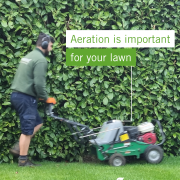
Aeration Can Help After a Difficult Summer
Dry weather, foot traffic, garden furniture and regular use can compact the soil over time.
Aeration creates openings that help air and moisture move more effectively through the rootzone.
It can help:
- Relieve compaction
- Improve water movement
- Increase airflow around the roots
- Support healthier root development
- Improve conditions before wetter winter weather
TruPlus includes annual aeration, while TruMax provides two aeration treatments as part of its more comprehensive, year-round care.
If your lawn is already struggling to drain after autumn rainfall, it’s worth finding out whether compaction is contributing to the problem.
Does Your Lawn Need Scarification?
Summer and autumn can also bring moss and excessive thatch to light. Scarification removes unwanted organic material from around the grass base, improving conditions at the lawn surface.
Where appropriate, it can help reduce:
- Excessive thatch
- Moss build-up
- Material restricting water movement
- Surface conditions limiting airflow
Scarification is part of the TruPlus and TruMax lawn care packages.
Timing is important, especially later in autumn. Your TruGreen lawn care expert can assess whether scarification is right for your lawn and the current conditions.
Keep Mowing While the Grass Is Growing
There’s no need to put the mower away just because October has arrived. If the grass is still growing actively, keep mowing as conditions allow.
As winter approaches:
- Raise the cutting height slightly
- Reduce mowing frequency as growth slows
- Avoid removing more than one-third of the blade
- Do not mow waterlogged or frosty grass
- Avoid cutting the lawn excessively short
Scalping a weakened lawn before winter adds stress at exactly the wrong time.
Keep it tidy, but leave enough leaf for the grass to continue making use of the available light.
Deal With Problems Before Winter
October is also a good time to address issues you might otherwise carry into winter.
Is moss becoming more noticeable?
Are certain areas staying wet?
Has the lawn become much thinner after summer?
Are birds showing unusual interest in a particular section?
Do leaves keep collecting in shaded areas?
Does the soil feel heavily compacted?
You may not be able to fix every issue right away, but finding the cause helps you understand what your lawn needs next.
Which TruGreen Lawn Care Package Can Help?
Lawns can enter winter in very different conditions.
TruLite offers essential, year-round treatments, including seasonal fertilisation, weed control, moss control and Aqua Boost.
TruPlus provides extra support with scarification, aeration, Recovery Boost and additional seasonal treatments.
TruMax is TruGreen’s most comprehensive lawn care package. Alongside ongoing seasonal treatments, it includes aeration, scarification, overseeding and top dressing, making it ideal for homeowners who want their lawn care managed throughout the year.
For lawns that have deteriorated more significantly, TruRenew offers a complete renovation alternative to returfing.
Your local TruGreen lawn care expert can assess which level of care best suits your lawn’s condition.
Prepare Your Lawn for Winter, Not for Perfection
October isn’t about creating a perfect green lawn before Christmas. It’s about helping your grass head into winter in the best condition possible. After everything lawns have been through this year, focus on:
- Appropriate autumn nutrition
- Healthy soil conditions
- Good drainage and airflow
- Clearing fallen leaves
- Sensible mowing
- Managing moss
- Addressing compaction
- Identifying thin or damaged areas
Preparing your lawn for winter now gives it a better chance of making it through the months ahead and starting spring in stronger shape.
Your lawn has already come through an exceptionally difficult summer.
Now help it get through winter, too.
Find your nearest TruGreen lawn care expert today and book your free 14-point lawn analysis.